A special episode: no Blender today
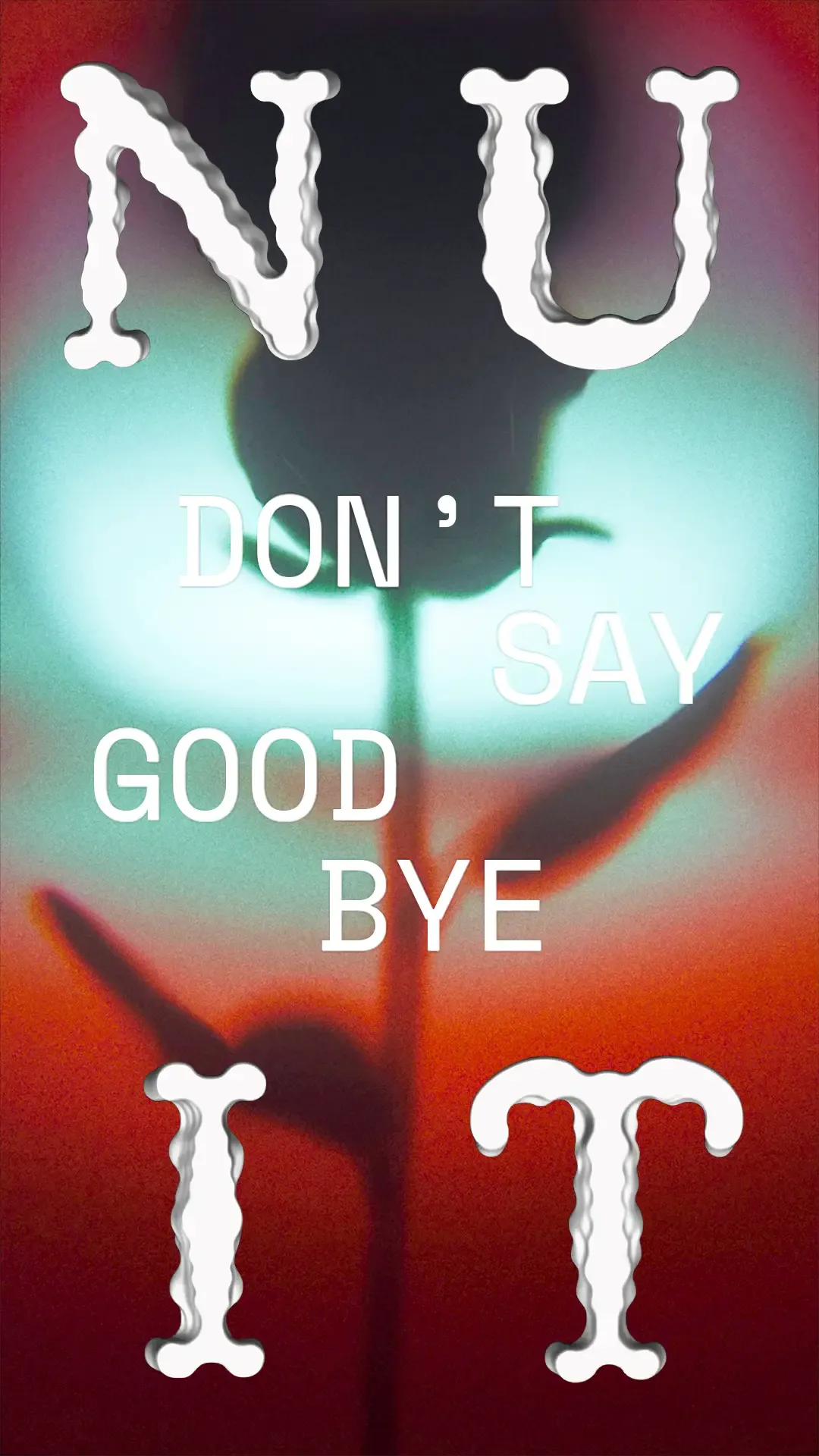
This is episode 3 of twelve visualizers in twelve weeks, and it runs a bit differently. “Don’t Say Goodbye” was the first video made for the album, the one where the whole art, video and 3D direction got laid down. So instead of opening Blender, this one stays in the design stage: the mood board, the title cut, the concept that ends up running through all twelve videos.
Two hundred listens and one mood board
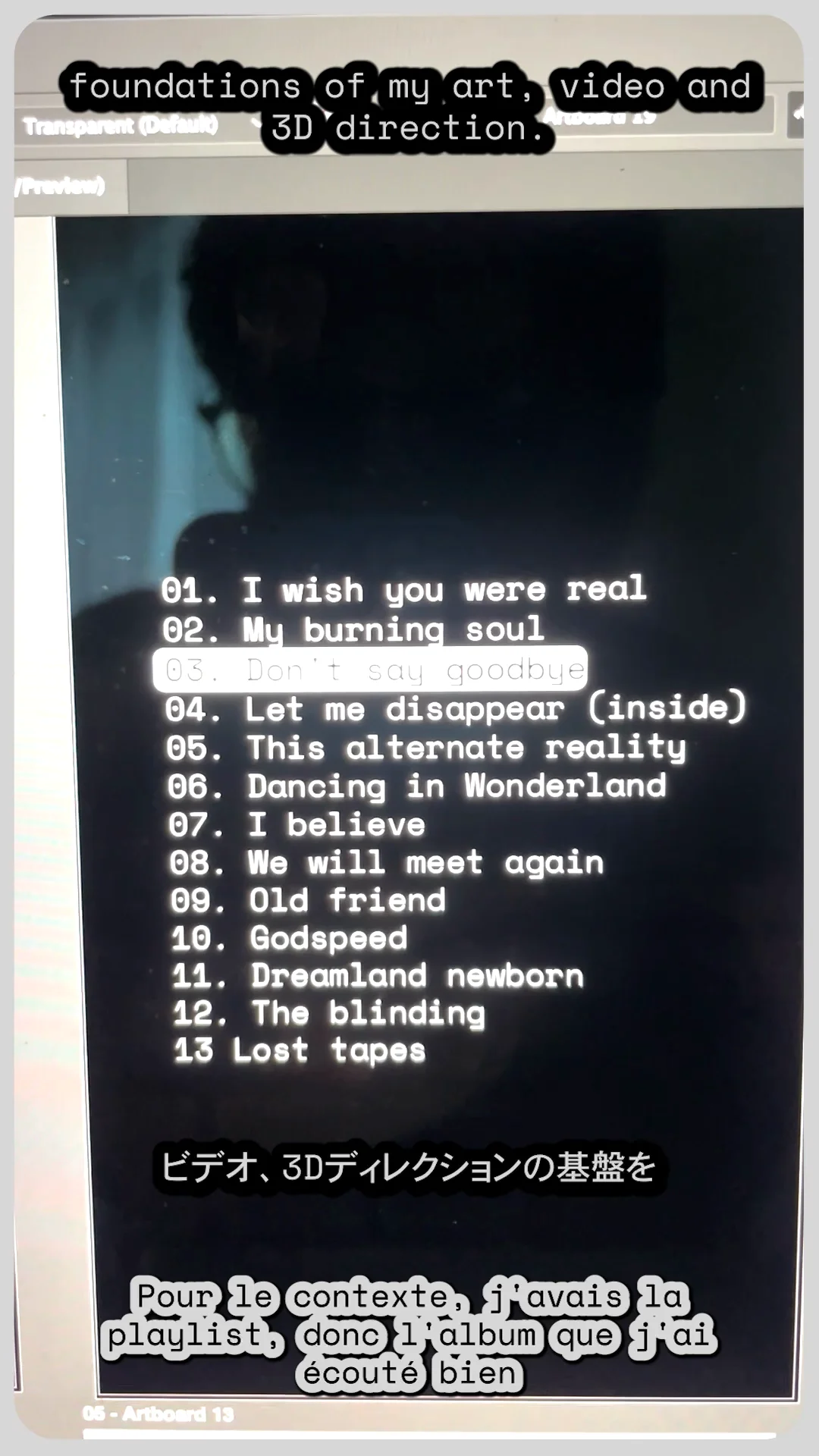
Before touching any software, the starting material was the playlist, listened to 200 to 300 times, and Franck Marry’s artistic direction for the album. That direction is what everything else gets built from.
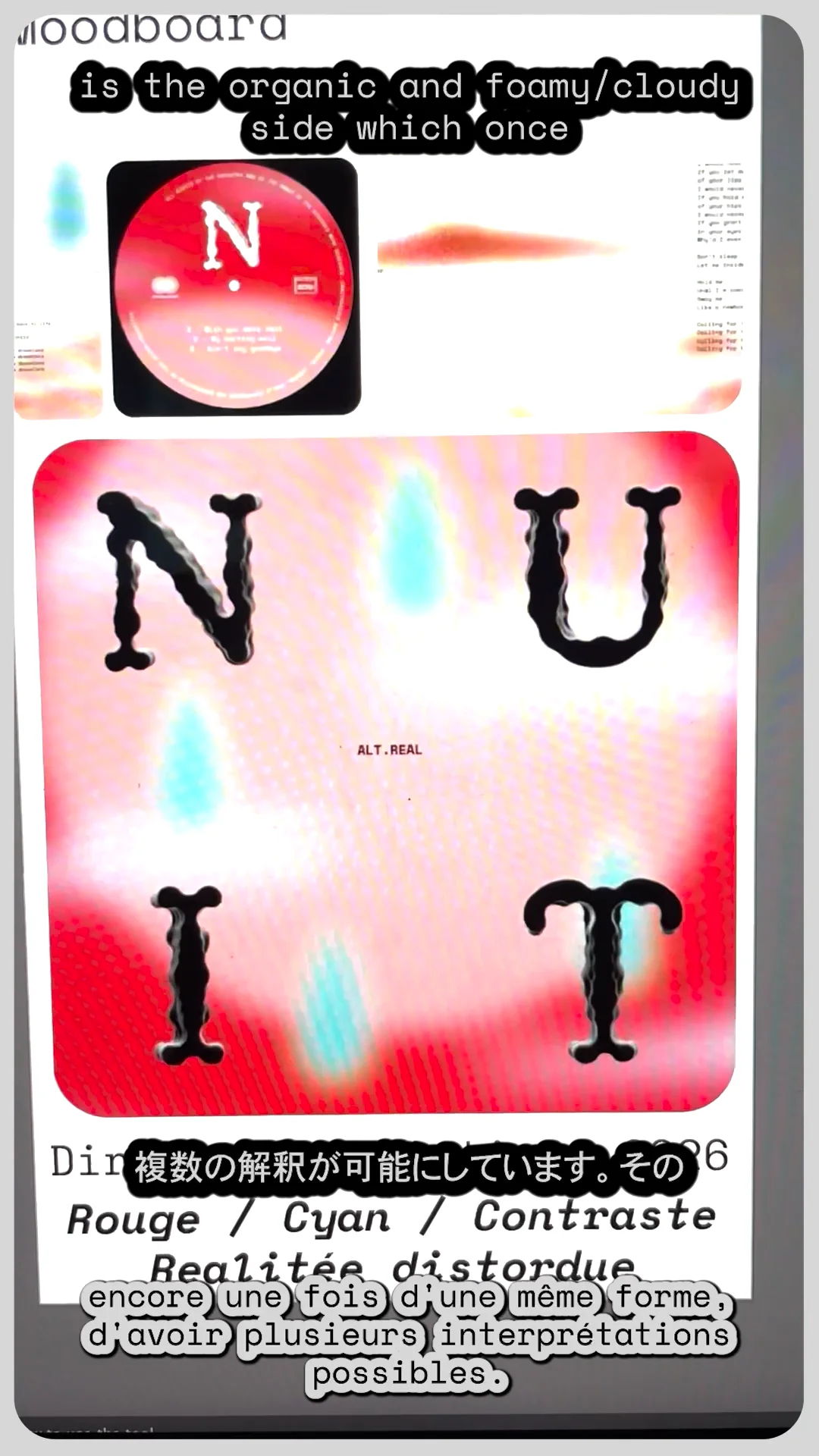
A few things stand out in it. The optical effects: blur and noise pushed far enough that shapes become a suggestion rather than a statement. A visual lexicon that’s small but reads several ways at once: a sphere that’s a circle, a moon, or a sun; drops that are drops, tears, stars, or silhouettes blurred just enough to maybe be the four members of N U I T; smoke that reads as UFOs, more visible in the vinyl edition. A colorimetry built on the contrast between a near-pure cyan and a red. And a typography that lives in two states: a hard, cold, bone-like register in black and white (which also exists inverted), and an organic, foamy, cloudy one, the same shapes each time, just reinterpreted.
Cutting the title
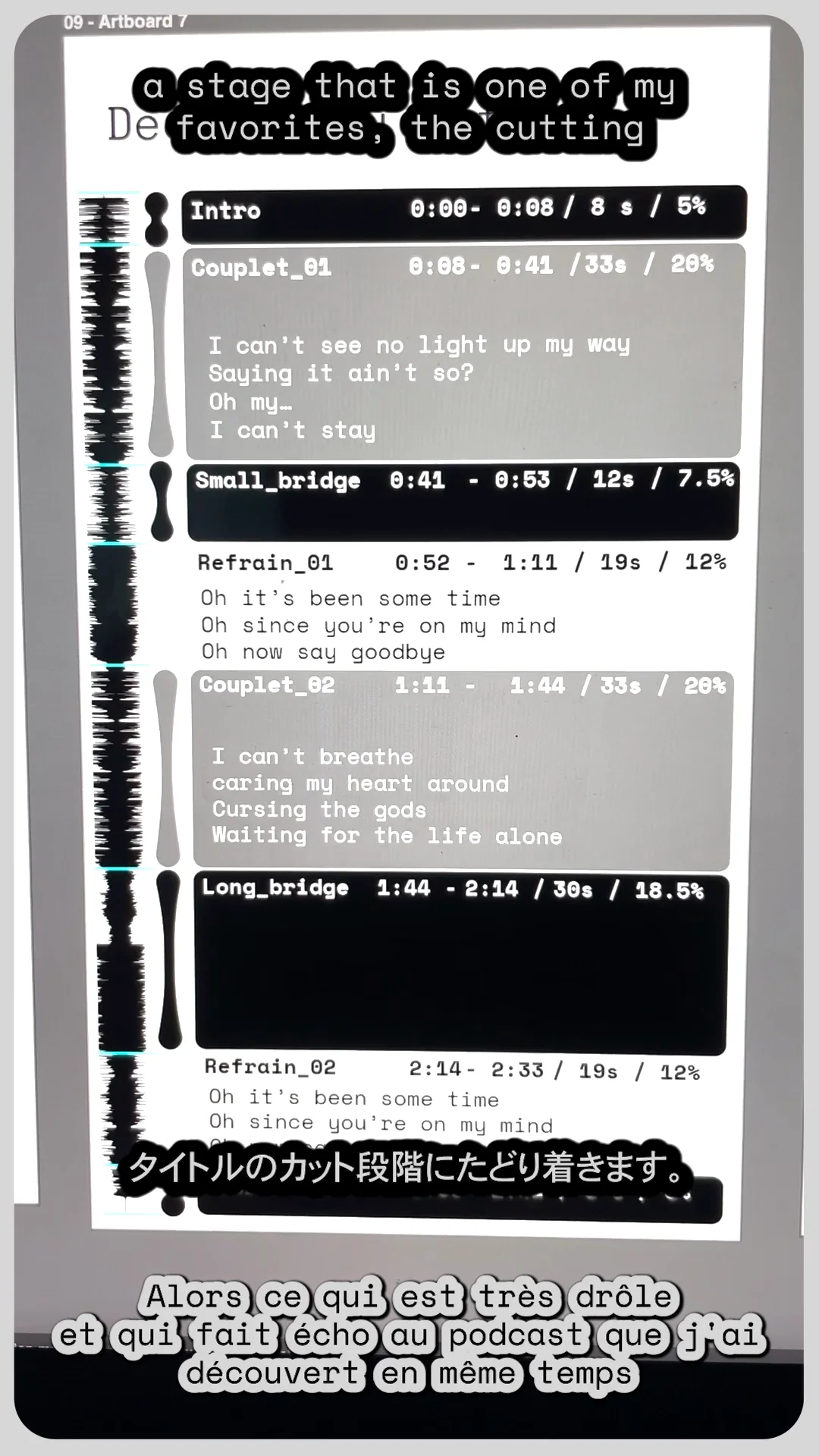
The goal for this first video was a visual interpretation that stayed true to that direction and to the song itself: the lyrics, their meaning, the textures, the atmosphere. Once that clicked, it was clear the same concept could carry across the whole album, one system holding twelve different emotional registers.
That led to one of the more interesting stages: cutting the title. On first listen, the track felt scattered, hard to follow as a structure. Breaking it down showed a clean, precise structure underneath. The instrumental splits into three types (intro, small bridge, long bridge, outro) plus two verses and two choruses, and each of those gets its own atmosphere: verses pull down into rumination and a sense of confinement, choruses lift into something brighter and more open, landing on the realization that the relationship is over. The music ends up as the video’s skeleton, and the feeling it carries shapes each scene.
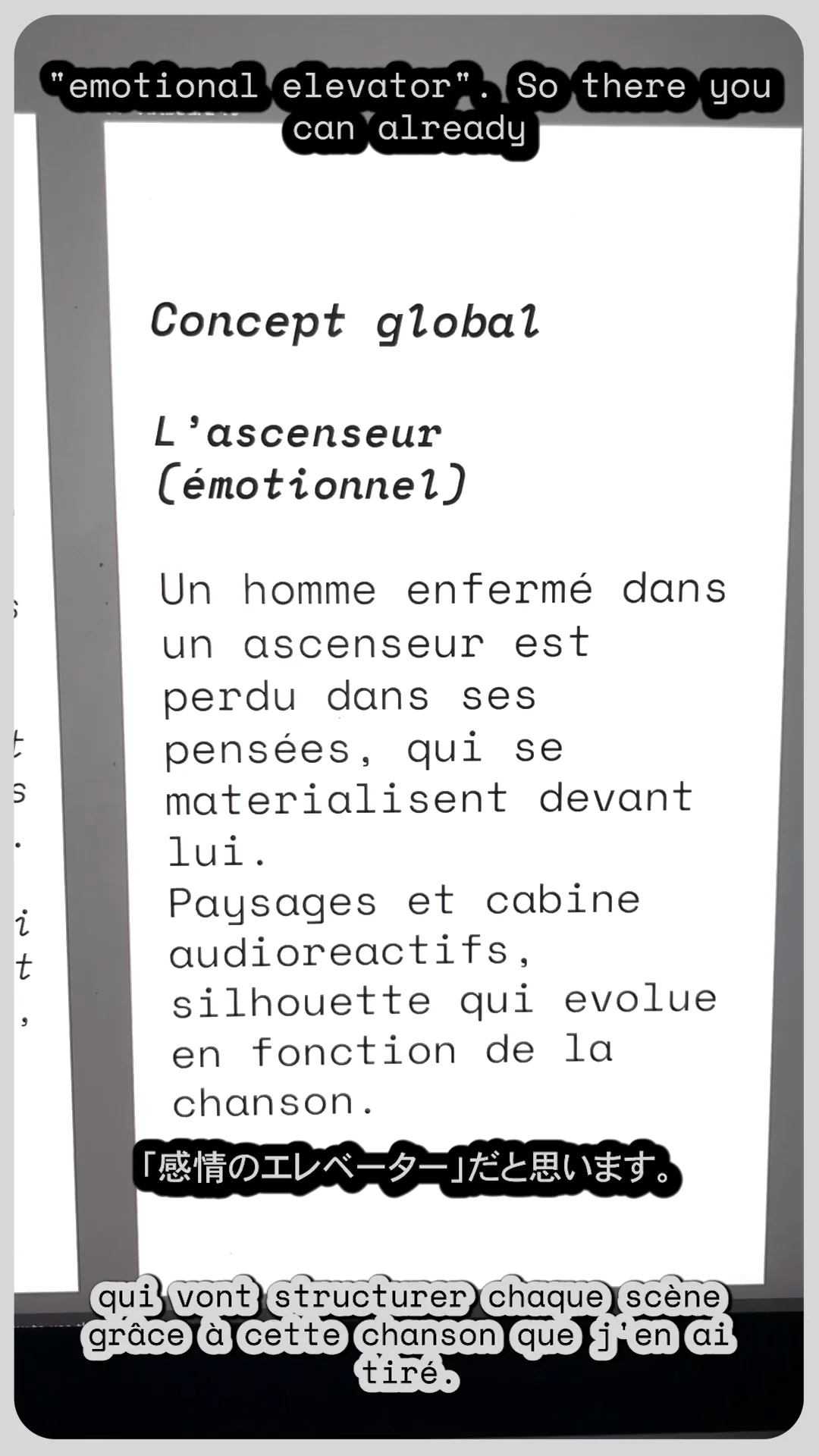
The emotional elevator
One concept ties the whole album together: the emotional elevator. It shows up here for the first time as a UI sketch: a glowing panel of floor buttons, one per track.
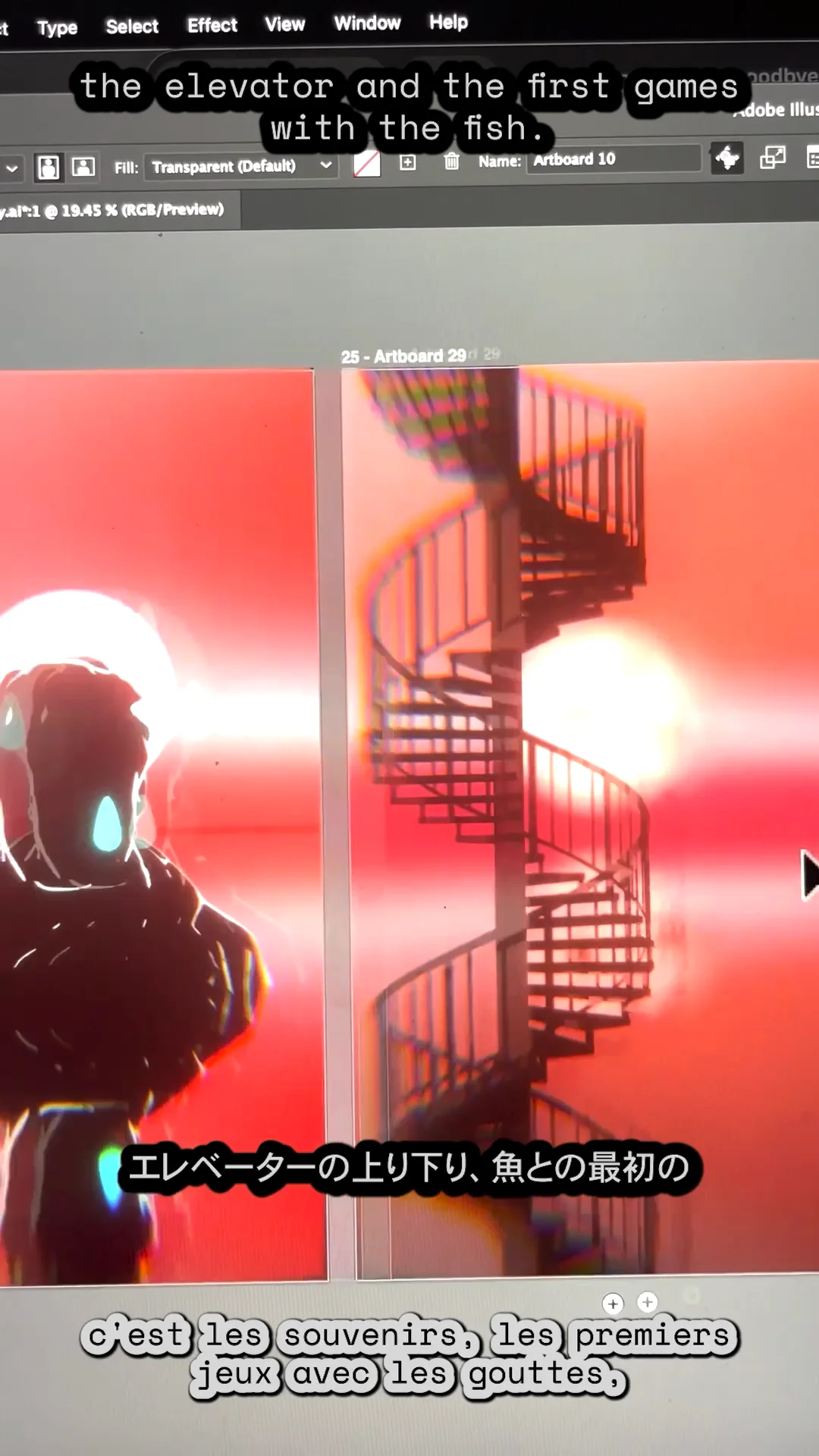
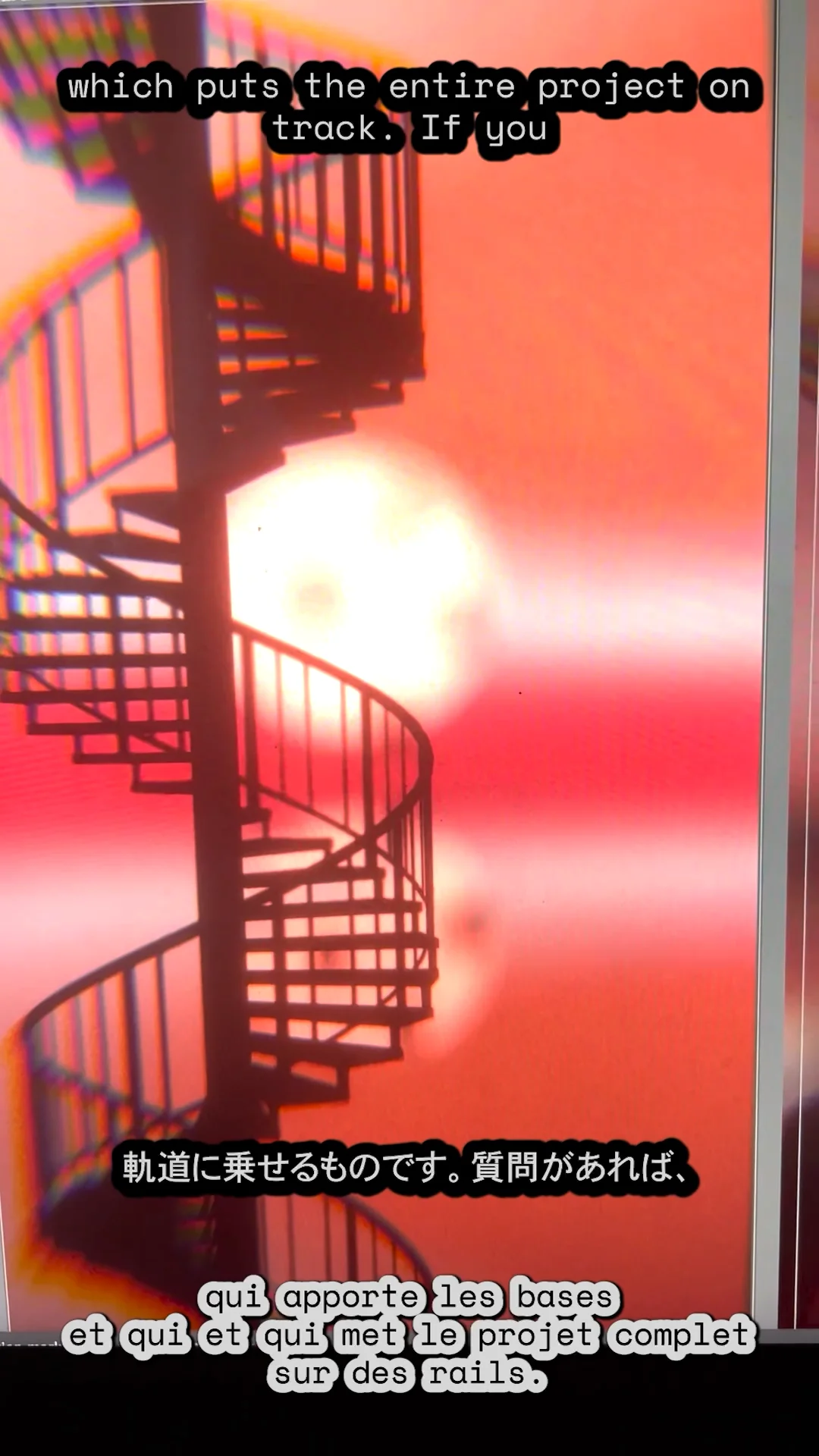
The first real visuals for the album came directly out of this stage, built straight in Blender: a spiral staircase, drops moving up and down an elevator shaft, early games with a fish motif that would carry through later episodes. Some of it barely changed between this first draft and the final cut.
Why this stage matters
No Blender file gets opened in this episode, on purpose. This design stage (the mood board, the title cut, the elevator concept) is the one that matters most. It sets the foundations and puts the whole project on track before a single scene gets built.
Spotify Canvas loop created from this visualizer
See you next week for episode 4, “Let Me Disappear (Inside).” The full series lives on the N U I T _ Alt Real case study, and the finished visualizer for this track is up on Instagram.